
Macro Relief Capped By Iran Risk — Eth Leads, Btc Holds
Blueprint - Disinflation Relief Capped / Eth-Led Rotation | Confidence: Medium
- June CPI printed -0.4% month-on-month, bringing the annual rate to 3.5% — the largest single-month decline since April 2020, and 30 basis points below the 3.8% consensus. Core CPI was flat on the month at 2.6% year-on-year. The miss is significant context: May's reading was 4.2%, meaning the gap closed in a single print cycle. The Fed now has its clearest disinflationary signal since before the Iran conflict began — but the question is whether a shooting war negates it before the July 29 FOMC.
- VIX surged 16.81% on the week to close at 18.76, as US-Iran military escalation drove WTI crude from a July 17 close of $78.95 to $82.49 intraday on July 20 — a 4% move. Equity markets absorbed the shock with a -1.19% weekly decline in the S&P 500 (last close ~7,457). The oil spike matters for crypto: sustained crude above $80 feeds back into CPI energy components and complicates the Fed's ability to act even as core inflation cools.
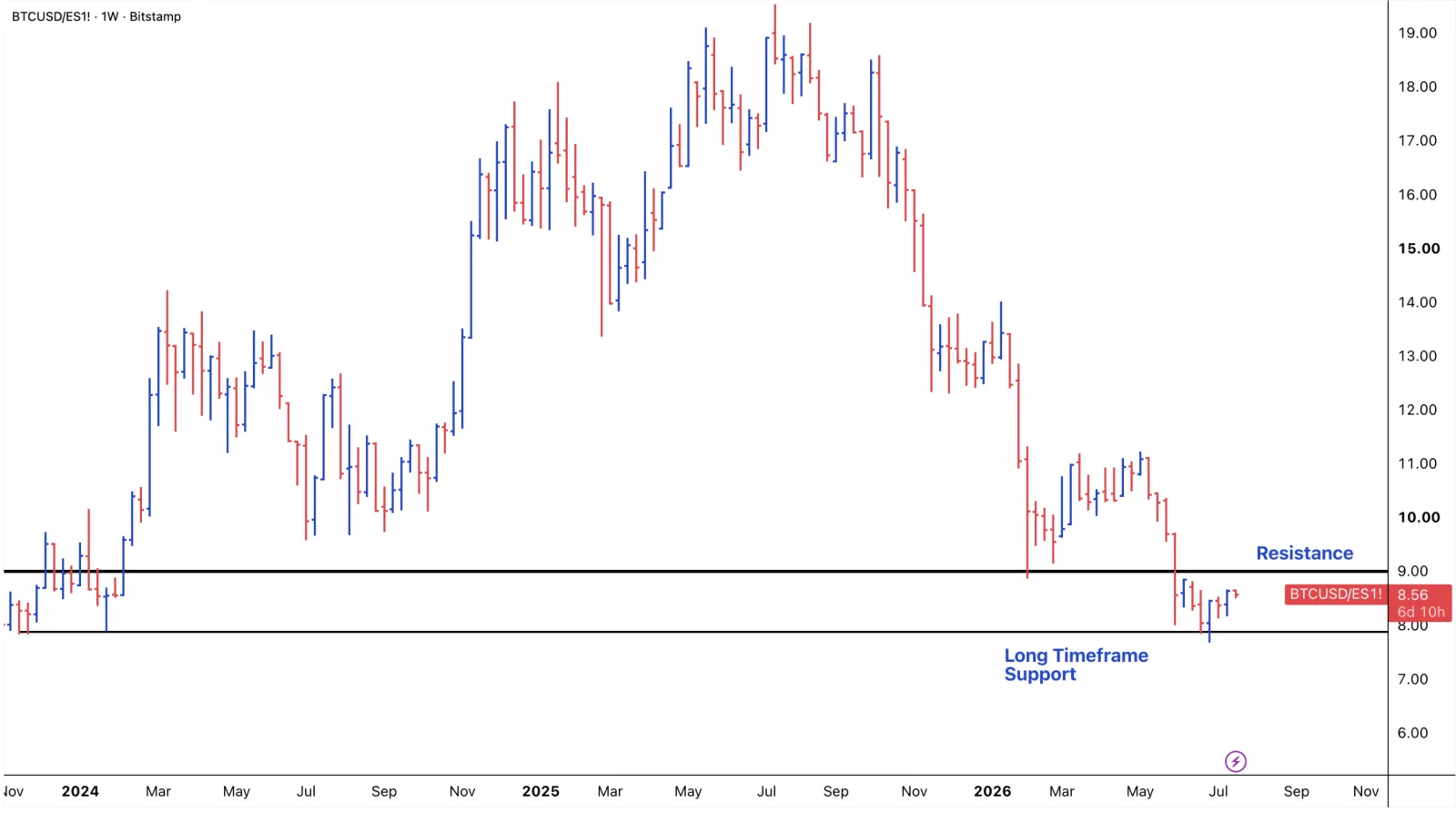
- Bitcoin's BTC/ES ratio (BTC price divided by S&P 500 E-mini futures) stands at approximately 8.63 — below the institutional reference floor of 9.0. A ratio below 9.0 historically indicates BTC is underperforming equities on a relative basis.
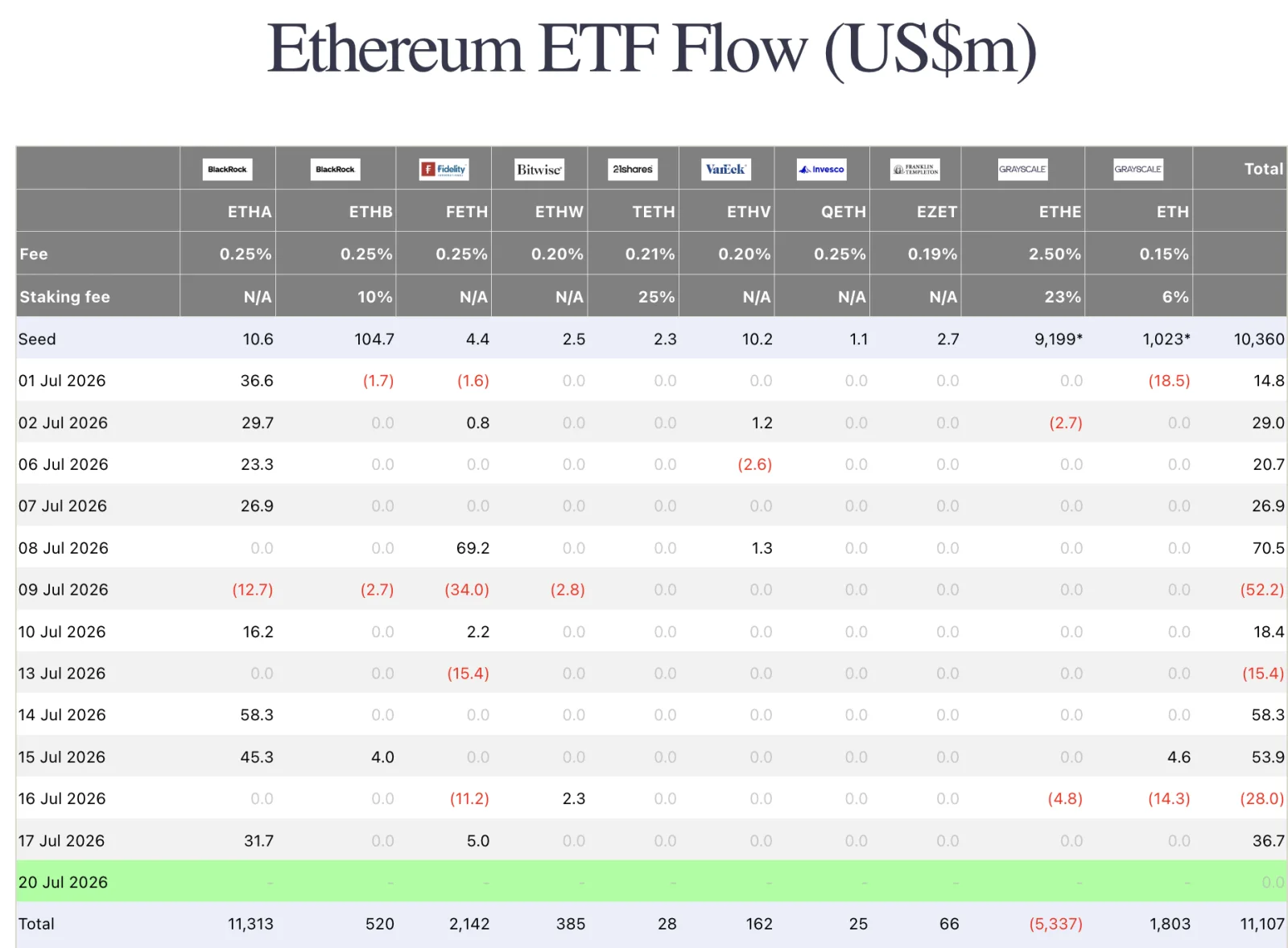
- ETH spot ETF inflows totaled $105.5M for the week ending July 18 — 58% of all crypto ETF inflows for the period — marking the second consecutive positive week after an eight-week outflow drought. Capital entering via ETF wrappers is typically institutional and long-duration. Two consecutive positive weeks following a prolonged drought is not a trend yet, but it is the beginning of one. Fidelity's FETH was the only notable exception, posting a single-day outflow of -$15.4M on July 13 before recovering.
- The CLARITY Act moved toward Senate floor action with a merged bill expected imminently, supported by more than 200 institutions on record. On July 10, Circle received final federal bank supervisor approval for USDC — the first stablecoin issuer under direct federal banking regulation. These two events arriving in the same week signal that the US regulatory architecture for digital assets is crystallizing faster than markets have priced. The practical implication: compliance barriers for institutional capital pools (pension funds, endowments) are falling.
Our take: This week presented two signals that should push in the same direction but did not. The June CPI print — the largest single-month decline since April 2020 — should have been a catalyst for risk assets and crypto in particular. A 3.5% annual rate with flat core is exactly the data the Fed needs to abandon its hiking bias. Instead, US-Iran military escalation pushed WTI above $82, raised VIX to near-19, and capped S&P 500 futures gains. Bitcoin moved just 1.27% on the week. The result is a market in suspended animation: the macro tailwind is real, but the geopolitical headwind is buying time for sellers.
The critical tension is whether the Iran conflict — and its oil impact — persists long enough to reverse the disinflationary trend. A one-month energy spike is a transitory event in the CPI context; a sustained oil war is a structural shock that changes the Fed's calculus entirely. Right now, markets are pricing neither outcome with conviction: VIX at 18.76 is elevated but not panicked, 10-year yields held near 4.55% rather than spiking, and ETF inflows continued across both BTC and ETH.
What resolves this regime: a cessation of Iran hostilities that lets oil fall back below $75 would immediately reinstate the disinflationary narrative, clear the path for FOMC rate-cut signaling, and likely catalyze the BTC/ES ratio move back above 9.0. A CLARITY Act floor vote before July 29 adds a second potential catalyst layer from the regulatory side. Both are plausible but not certain — hence medium confidence.
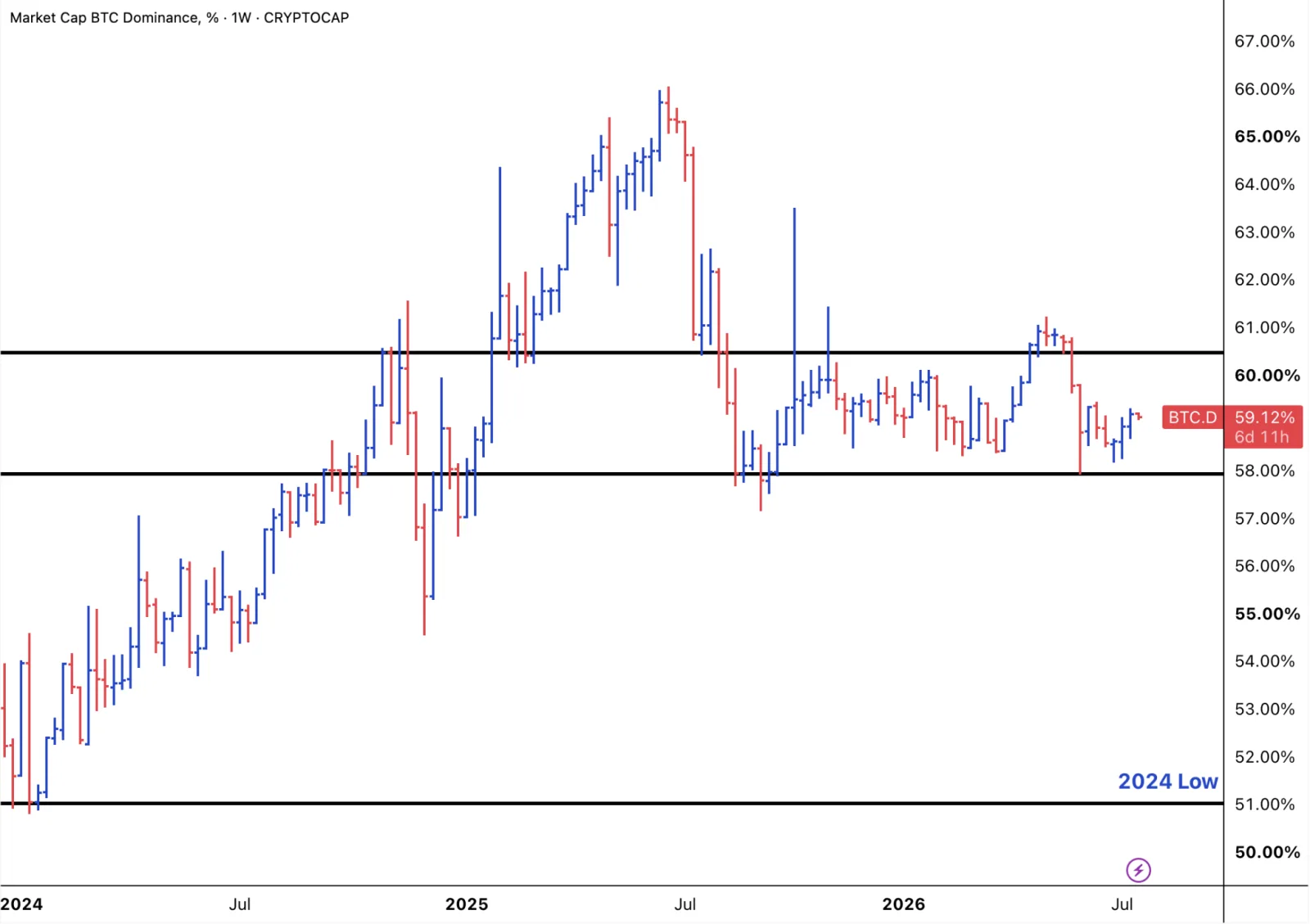
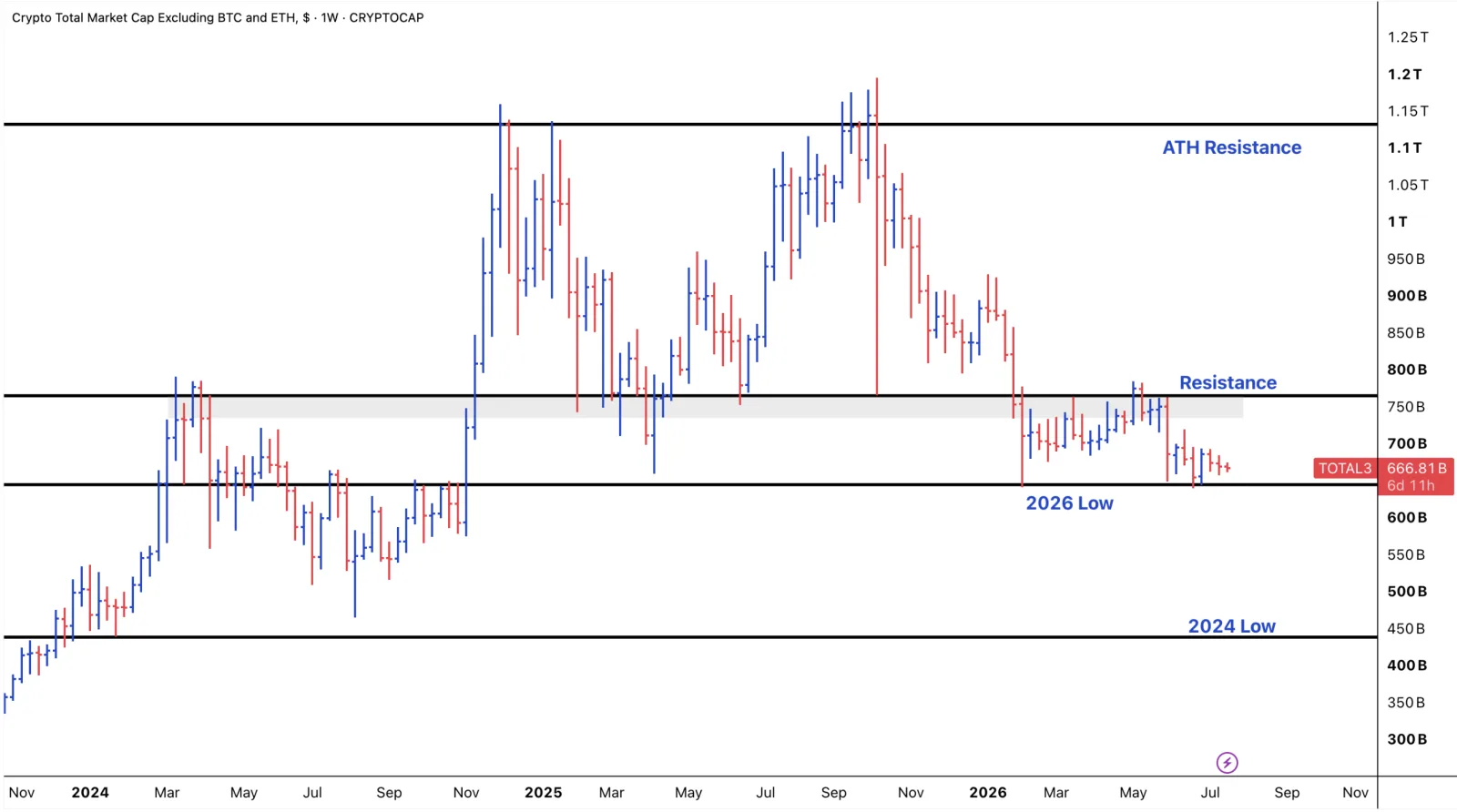
BTC - Holds $64K as macro tailwinds and geopolitical risk cancel
- Bitcoin ended the week at $64,386, up 1.27% — a muted response to both the largest US CPI downside surprise in six years and a 17% spike in the volatility index. The price action is informative: BTC is behaving more like a risk-managed institutional asset than a speculative vehicle, refusing to break higher into geopolitical uncertainty while also declining to sell off materially on VIX expansion.
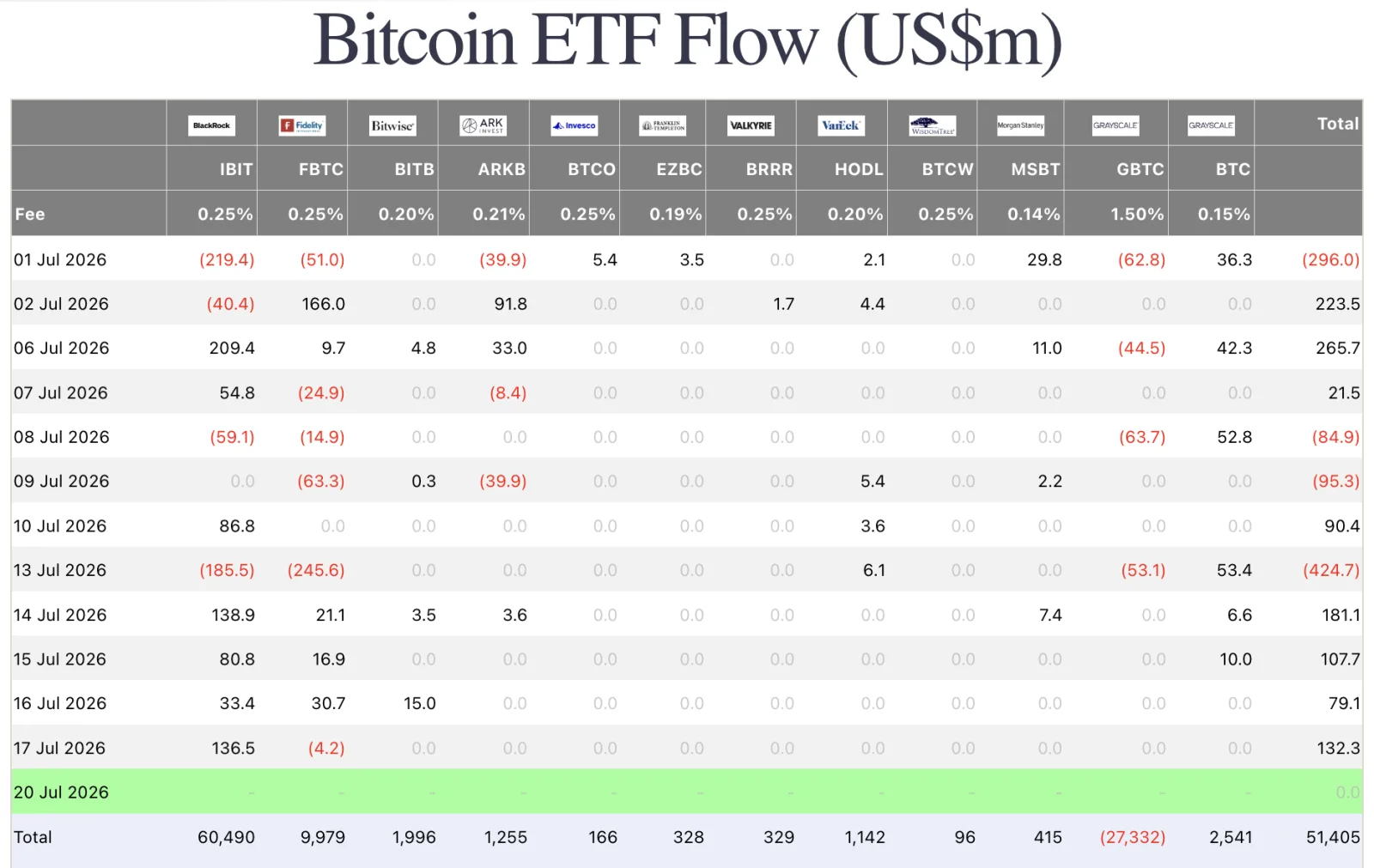
- BTC spot ETFs attracted approximately $289M in net inflows for the week (July 14: $181M; July 15: $108M), with IBIT accounting for the dominant share throughout. This is the second consecutive positive week after the 10-day, $2.73B outflow streak that ended in early July. The pattern — IBIT absorbing the bulk of flows while smaller funds remain flat — suggests institutional demand is consolidating around BlackRock's product as the preferred vehicle.
- The BTC/S&P E-mini ratio stands at approximately 8.63 — below the 9.0 reference floor — meaning BTC has not yet begun to outperform equities. Historically, institutional risk-on rotations into crypto require this ratio to trade convincingly above 9.0 for a sustained period.
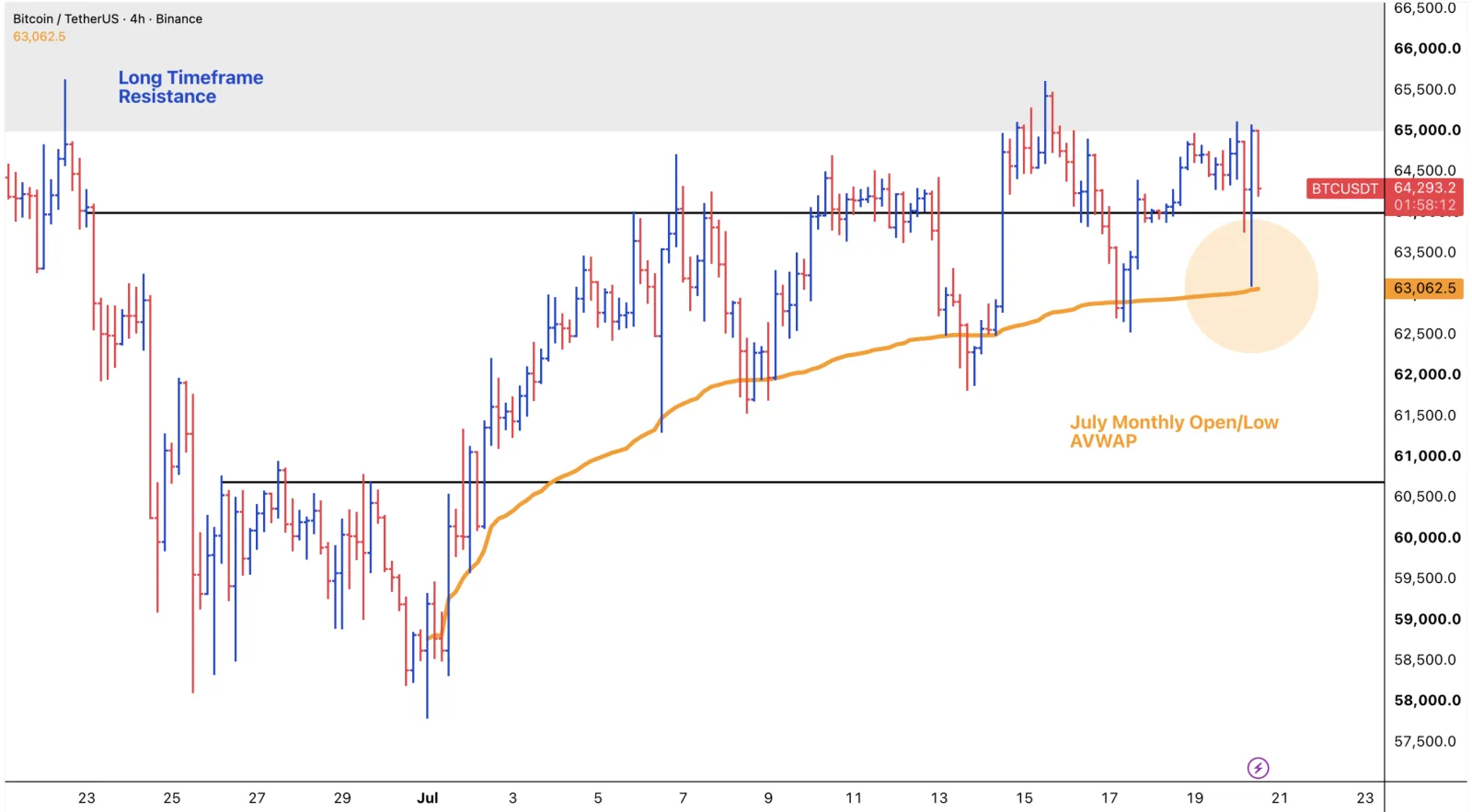
- Key resistance: the $66,000–$67,000 cluster represents the average cost basis of buyers from March–April 2026. A weekly close above $67K would flip this seller overhang into support and likely trigger the next leg of accumulation. Below $62,000 is the downside reference level — a close there would signal the recovery from the May-June drawdown has stalled. Currently the strong supportive zone lies at $63,136, the AVWAP anchored from the July lows.
Our take: BTC's 1.27% weekly gain tells a story of contained optimism. The disinflationary print was unambiguously positive; ETF flows confirmed institutional interest remains intact; and the regulatory environment is improving by the week. What's keeping BTC from breaking out is the combination of: (1) geopolitical oil risk reintroducing inflation uncertainty before the July 29 FOMC, (2) the $66-67K seller overhang from March-April buyers, and (3) equity market hesitation (SPX -1.19%) reducing the risk-on appetite that typically precedes a BTC leg higher.
The watch for the week ahead is clear: does oil stabilize below $80 as Iran de-escalation signals emerge? If yes, the macro tailwind reasserts and BTC has a clean path to test $67K. The July 29 FOMC is the major scheduled catalyst — a dovish hold or cut signal would be the first official validation of what the CPI data is already implying.
ETH - Outperforms BTC as institutional ETF rotation resumes
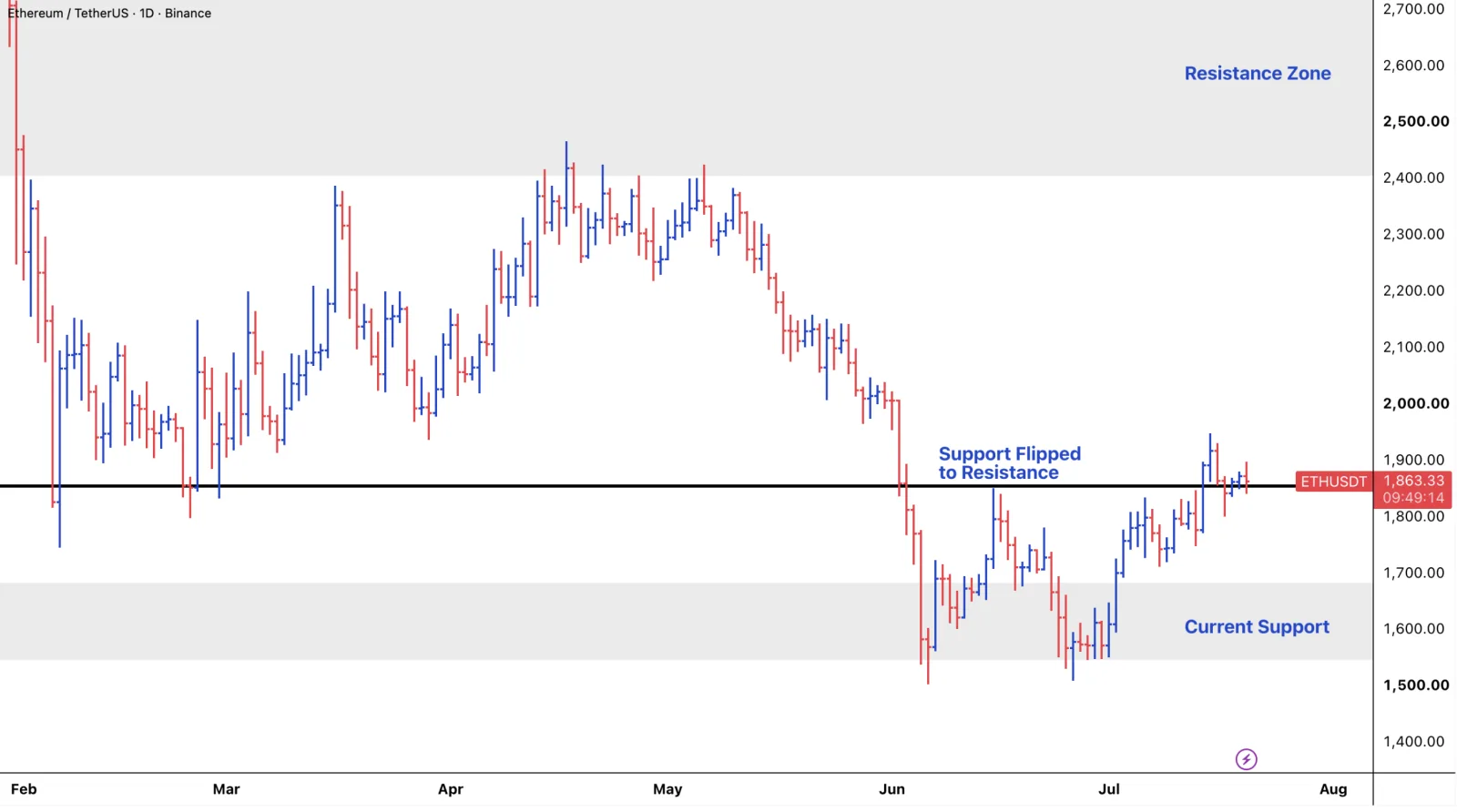
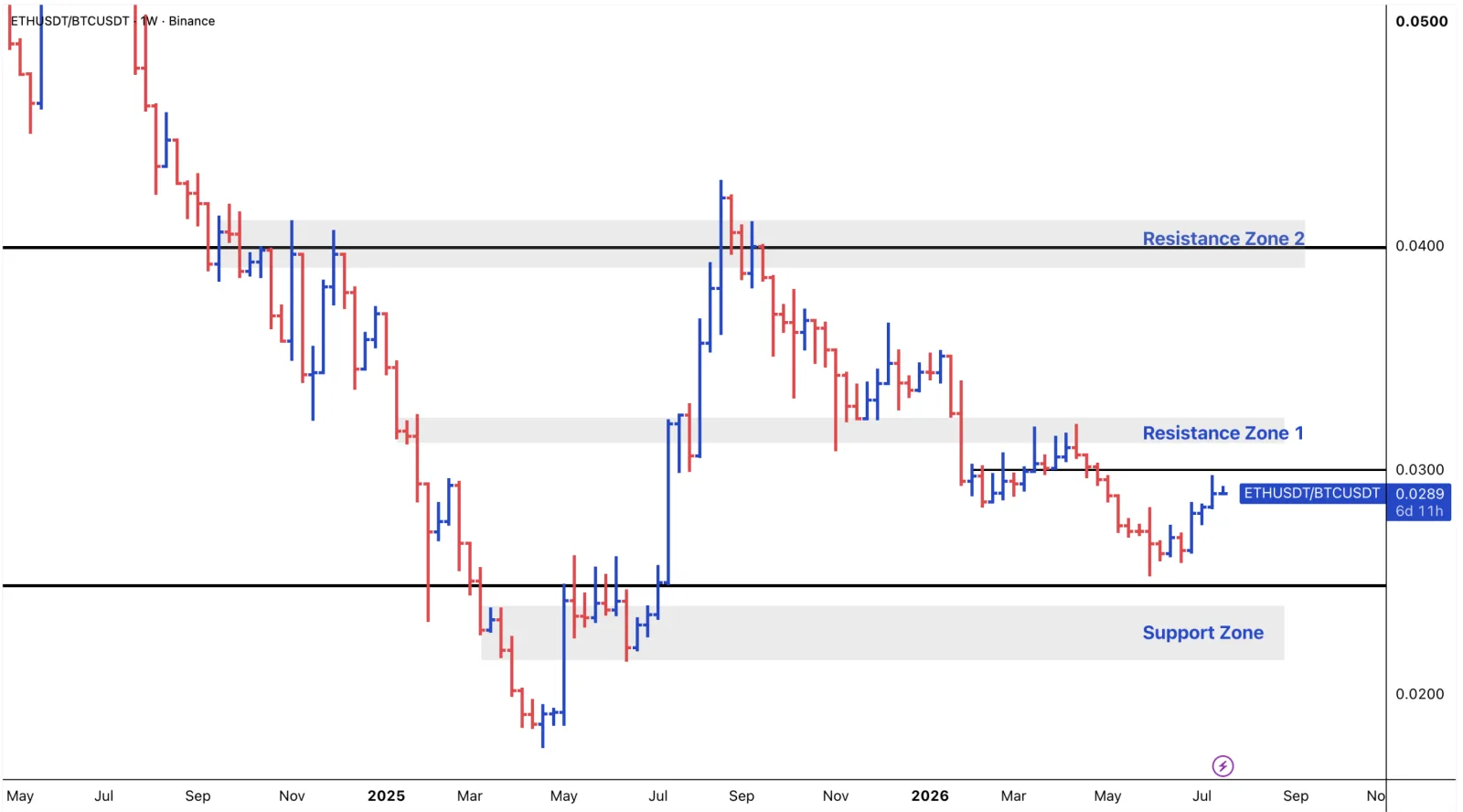
- Ethereum ended the week at $1,873, up 4.35% — outperforming Bitcoin by 3.08 percentage points and pushing the ETH/BTC ratio up 3.57% to approximately 0.0291. The ETH/BTC ratio sits well below 2024 cycle highs above 0.040, but the direction of change matters as much as the level when early-cycle rotation begins.
- ETH spot ETF inflows of $105.5M represented 58% of all crypto ETF inflows for the week — a decisive reversal after eight consecutive weeks of outflows. Capital entering via institutional wrappers is long-duration and less likely to exit on short-term volatility. Two consecutive positive weeks following an eight-week drought is not a confirmed trend, but it is the early formation of one. The ETHA (BlackRock), FETH (Fidelity), and broader ETH complex all participated except for one single-day FETH outflow on July 13.
- The institutional narrative for ETH has pivoted from "deflationary money" to "settlement layer for tokenized assets." SWIFT's live blockchain ledger launch on July 9 — 17 banks across six continents settling tokenized deposits — directly validates ETH's infrastructure role. Securitize crossing $5B in tokenized real-world assets is a second data point in the same direction. For ETF investors, these are the use-case justifications for long-duration ETH allocation.
- The ETH/BTC ratio at 0.0291 is technically significant: a sustained move toward 0.032-0.034 would represent the first major ETH/BTC breakout since the 2024 cycle, and would signal a durable institutional preference shift rather than a tactical bounce.
Our take: ETH's outperformance this week was not accidental. It reflected a convergence of ETF re-accumulation, improving rate expectations from the CPI print, and the tokenization narrative crystallizing in real institutional deployments. The case for ETH at this stage of the cycle is that investors who lagged the 2024 BTC ETF wave are now entering through ETH vehicles as a second-mover strategy — a pattern consistent with how institutional capital moves into new asset classes.
The key watch: can ETH/BTC ratio extend toward 0.032-0.034, marking a structural rotation signal? ETH needs to hold $1,800 as support through any geopolitical-driven selloff — a break below that level would suggest the ETF inflow momentum is insufficient to absorb macro risk-off pressure. The upside catalyst with the clearest timing: a CLARITY Act passage that explicitly validates ETH's non-security classification would be a step-change event for ETH specifically.
ALTS - Flat week; capital concentrates in ETH and select large-caps
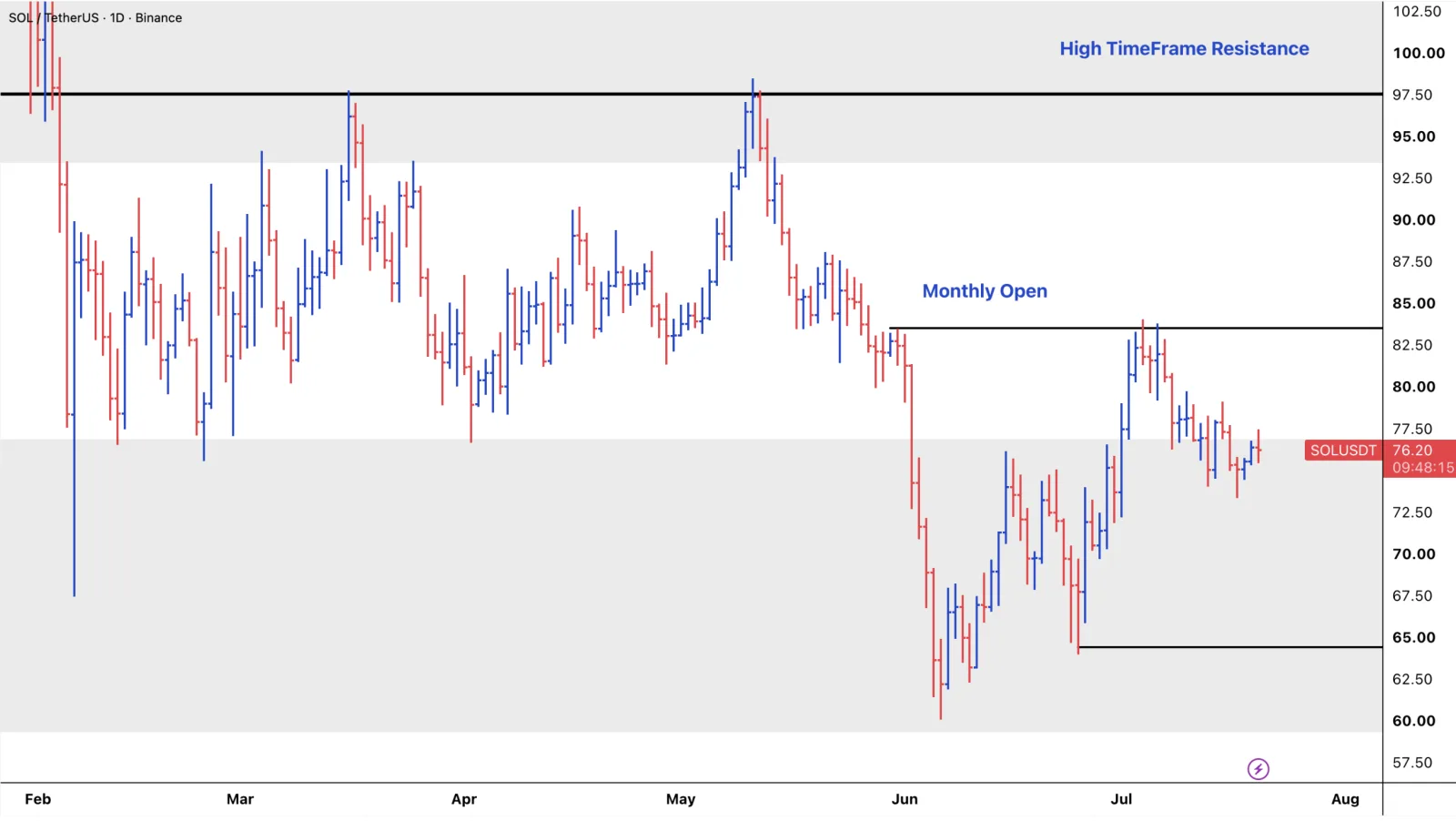
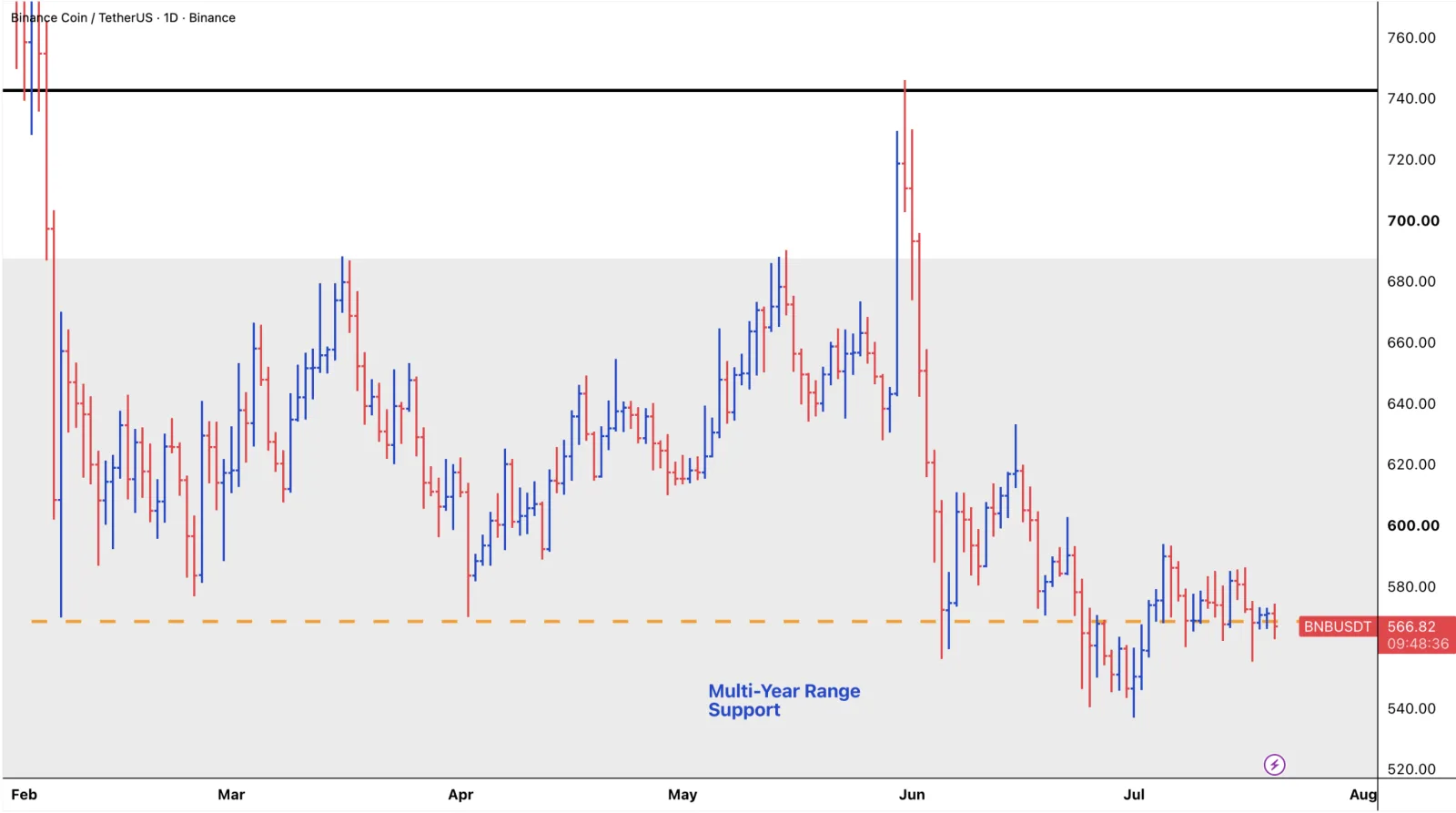
- SOL declined 0.85% and BNB fell 1.00% on the week, underperforming both BTC and ETH. The divergence is informative: ETH outperformed SOL/BNB by approximately 4 percentage points, suggesting intra-crypto rotation is favoring the largest, most liquid assets over mid-tier layer-1 alternatives. This is a macro-defensiveness signal within crypto — capital consolidating, not expanding.
- TOTAL3 (total alt market cap excluding BTC and ETH) fell 0.65% on the week to $670.67B. Despite individual outperformers at the large-cap end, the aggregate alt market was essentially flat — indicating gains were concentrated in a handful of assets rather than representing broad-based recovery. This is a selective alpha environment, not broad alt season.
- ADA surged approximately 26% on the week — the strongest large-cap gainer — driven by a combination of extreme oversold conditions (from a multi-year low near $0.138) and positive regulatory sentiment around the CLARITY Act. AAVE added 21.6%, consistent with DeFi blue-chip re-rating as the SEC's safe harbor proposal for DeFi protocols removes some of the litigation premium. DEXE gained 30% — the most speculative of the three — without a clear fundamental catalyst.
- PUMP faces a 20.21% total supply unlock in July, and WLD and TRUMP carry similar concentrated cliff releases (TRUMP at 11.81%). Tokens with high unlock percentages relative to total supply are where selling pressure risk concentrates — and these events play out independently of macro or BTC direction.
Our take: The alt market is sending a clear message: this is a quality-first, early-cycle environment. Capital is rotating into ETH via ETFs, then into select large-caps with clear narratives (ADA on regulatory, AAVE on DeFi safe harbor), and is not yet reaching smaller-cap names in size. The TOTAL3 flatness despite those individual outperformers illustrates that selling pressure in the broader alt complex is absorbing rotation before it can produce index-level gains.
The trigger for genuine alt breadth is BTC breaking and holding above $67K — that historically signals sufficient risk appetite to push capital further down the quality spectrum. Until that break, the playbook is selective: oversold large-caps with regulatory tailwinds, established DeFi names benefiting from the SEC safe harbor, and a hard pass on high-unlock tokens where supply dynamics work against the trade.
Alpha Cluster - DeFi safe harbor and RWA convergence define the week's theme
- ADA (+26%), AAVE (+21.6%), and DEXE (+30%) led large-cap performance with distinct narrative catalysts. ADA's move came from deeply oversold conditions and regulatory clarity prospects from the CLARITY Act; AAVE's followed the SEC's safe harbor proposal for DeFi projects, which directly reduces the litigation overhang on established protocols; DEXE's gain is more speculative and lacks clear fundamental follow-through.
- Securitize crossed $5B in total tokenized real-world asset (RWA) value — the first tokenization platform to reach this milestone — and Japan's largest digital securities platform migrated ¥452B ($2.7B) in regulated securities to Avalanche with 3-5x faster settlement and no operational disruption. The geographic spread (US and Japan, in parallel) signals that tokenized securities are transitioning from single-market proof-of-concept to multi-jurisdiction institutional standard.
- The SEC proposed a safe harbor for DeFi projects as part of its "Regulation Crypto" rulemaking package — simultaneously proposing new registration exemptions for on-chain capital raises and offering clearer compliance pathways for exchanges, stablecoin issuers, and blockchain companies. This is the regulatory acknowledgment that DeFi protocols are not inherently securities violations, and it arrived in the same week Circle's USDC received federal bank supervisor status.
- The PUMP token unlock (20.21% of supply) and TRUMP unlock (11.81%) in July are the primary supply headwinds for the near-term alt market. $376M+ in total unlocks across 145 projects hit in July, with the Pump.fun, Aptos, and RedStone unlocks leading the second-week calendar. These events create localized selling pressure that can depress returns in adjacent tokens.
Our take: The alpha theme this week was regulatory crystallization converting into capital allocation decisions. Three events — USDC federal bank approval, CLARITY Act imminence, and the SEC's DeFi safe harbor proposal — landed in the same legislative window. The market is beginning to price the transition from "regulatory uncertainty" to "regulatory infrastructure." This is the shift that historically precedes institutional product launches: once compliance boxes are checked, capital waiting on the sidelines begins to move.
The RWA convergence story (Securitize $5B, SWIFT live ledger, Japan tokenized securities) is no longer a narrative — it is a measurable asset class with verifiable volume and institutional participation across continents. For Hex Trust specifically, this is the operating environment that directly validates the custody infrastructure play: the more real-world assets move on-chain, the greater the demand for regulated, institutional-grade custody. Watch for CLARITY Act floor vote timing — a positive outcome before the July 29 FOMC could create the most significant institutional allocation window of the cycle.
Rails, Regulation & Institutionalisation - Federal stablecoin regulation arrives; SWIFT goes live on blockchain
- Circle's USDC received final federal bank supervisor approval on July 10, becoming the first stablecoin issuer under direct federal banking regulation. This places USDC custody at regulatory parity with bank trust departments — the custodians used by pension funds, endowments, and family offices. The practical implication: regulated institutional capital pools previously blocked from holding USDC on compliance grounds now have a clear path forward.
- SWIFT's live blockchain ledger launched July 9 with 17 participating banks across six continents — including DBS, OCBC, UOB, Standard Chartered, HSBC, BNY, Citi, and others — enabling tokenized deposit payments with near-instant settlement. If this scales beyond the pilot phase, it represents the largest single validation of blockchain settlement infrastructure by traditional finance to date. The mechanism is direct: tokenized deposits settling on a shared ledger cuts settlement from days to near-instant and eliminates counterparty exposure windows.
- Securitize surpassed $5B in total tokenized RWA value while Japan's largest digital securities platform migrated ¥452B ($2.7B) to Avalanche with 3-5x faster settlement and zero operational disruption. The US-Japan parallel rollout across different regulatory regimes signals that tokenized securities are crossing the threshold from isolated pilots to multi-jurisdictional infrastructure deployment.
- The US-Iran military conflict drove WTI crude from $78.95 (July 17 close) to $82.49 intraday on July 20 — a 4% single-session move that represents the primary macro tail risk for the week ahead. Sustained crude above $80-85 is the level at which energy prices re-contaminate CPI readings enough to give the Fed cover for inaction at July 29. The geopolitical premium in oil is real but historically volatile — supply disruption fears can reverse as rapidly as they emerge.
Our take: The rails story this week is one of infrastructure milestones arriving in a dense cluster: federal banking regulation for the dominant stablecoin, the world's largest interbank messaging network going live on blockchain, and tokenized RWA crossing the $5B institutional AUM threshold. These are not coincidences — they reflect coordinated institutional preparation that has been underway since the 2025 regulatory clarity wave. The week of July 14-20, 2026 may look, in retrospect, like the week the transition from "crypto as an asset class" to "crypto as financial infrastructure" became impossible to ignore at the C-suite level.
For institutional allocators, the practical upshot is that the custody and settlement layer for digital assets now has federal-grade oversight (USDC), traditional-bank participation (SWIFT), and verifiable AUM scale (Securitize). The remaining barrier is regulatory framework for trading venues — which the CLARITY Act, if passed, directly addresses. July 28-29 FOMC and any CLARITY Act vote before then are the next catalysts to watch.
Outlook - FOMC BINARY — July 29 decision is the market's next forced hand
- The July 28-29 FOMC meeting is the market's most important near-term catalyst: the Fed either holds at 3.5-3.75% and signals a path to cuts on the back of the June CPI miss, or it cites the Iran oil shock as a reason for continued caution. The June CPI print (-0.4% MoM, 3.5% YoY) was the clearest case for Fed easing since the inflation peak. However, WTI above $82 on July 20 — before the FOMC blackout period — means the Committee has geopolitical oil risk as a legitimate counter-argument for patience.
- BTC must close a weekly candle above $67,000 to confirm the recovery from the May-June drawdown is durable. The $66-67K range represents the average cost basis of buyers from March-April 2026; a weekly close above this level converts overhead sellers to support and opens the next technical target at $72-75K. Below $62,000 is the failure scenario — it would indicate the recovery has stalled and the drawdown continues. July Monthly Low AVWAP resting at $63,136 as additional area of support.
- ETF flow follow-through is the institutional demand confirmation signal: two positive weeks after a 10-day BTC outflow streak and an eight-week ETH ETF drought. Three consecutive positive weeks (requiring positive data for July 21-25) would confirm institutional re-accumulation is durable, not a technical bounce. IBIT's $86.8M single-day print on July 10 sets a high bar for the next data points.
- The PUMP token unlock (20.21% of total supply) and TRUMP unlock (11.81%) in July are the principal alt market supply headwinds for the next 2-4 weeks. Concentrated cliff unlocks of this magnitude typically create 10-30% downside pressure in the specific tokens, with modest spillover into correlated assets. Sizing around these events requires accounting for the supply overhang.
- The CLARITY Act Senate floor vote — expected before July 29 — is the non-FOMC catalyst with the broadest potential market impact. More than 200 institutions have urged passage; a successful vote would be the most significant US digital asset legislation of the current regulatory cycle. The market has not fully priced a positive outcome — US regulatory clarity at the federal level remains discounted as a tail scenario, not a base case.
Our take: The week of July 21-27 is a coiled setup. On one side: the CPI miss (disinflation) + ETF flows (institutional demand) + regulatory crystallization (CLARITY Act, USDC approval, SEC safe harbor) argue for higher. On the other: geopolitical oil shock + VIX near 19 + BTC still below the $67K seller overhang argue for caution. The July 29 FOMC removes one major uncertainty — but only if the Fed signals clearly on rate path, which it may not do without an accompanying economic projections release.
The selective positioning guidance for this environment: overweight assets with specific near-term catalysts (AAVE on DeFi safe harbor momentum, ETH on ETF inflow confirmation, USDC-adjacent infrastructure on Circle's federal approval), underweight high-unlock tokens (PUMP, WLD, TRUMP) where supply dynamics work against the trade regardless of macro, and size BTC exposure with $62K as the stop reference and $67K as the confirmation target. The geopolitical tail — a rapid US-Iran de-escalation — is the asymmetric upside scenario: if oil drops back below $75, the macro disinflation narrative fully reinstates and the path to $70K+ opens within days.
Thanks for reading this week's Market Pulse.
You can follow us on Telegram for all our updates: @HT Markets